ConnectWise ScreenConnect and TeamViewer are two of the most widely used remote support platforms, but they target different types of IT teams. ScreenConnect is popular with MSPs and internal IT departments that need deep customization, on-premise deployment, and technician-focused workflows. TeamViewer takes a broader approach, combining remote support, unattended access, mobile apps, enterprise integrations, and one of the widest platform selections in the industry.
Both products are well suited to their intended audiences, but they take different approaches to licensing. ScreenConnect is available only through paid subscriptions starting at $30/month. TeamViewer offers a free tier, but limits it to personal use and may restrict or suspend accounts when it detects commercial activity. As organizations grow, TeamViewer also licenses many plans by concurrent channels rather than operator seats, making costs less predictable for busy support teams.
HelpWire is designed around a different support model. Instead of enterprise endpoint management or personal remote access, it focuses on helping IT teams support clients with as little setup as possible. The free plan includes:
- • Free Plan for Business Support. Unlike ScreenConnect and TeamViewer, HelpWire allows both personal and business use without commercial-use detection or session restrictions.
- • Quick Connect for Ad-Hoc Support. Start a remote session by sending a connection link. Clients don’t need to create an account, remember an ID, or prepare their computer in advance. They simply open the link, run the app, and approve the connection.
- • Built for Client Management. Keep customer devices organized with a client directory, profiles, notes, groups, and session history instead of treating every session as a standalone connection.
- • Straightforward Operator Licensing. Paid plans are licensed per operator rather than concurrent channels, making it easier to understand how costs grow as your team expands.
Both tools were evaluated for attended and unattended support, file transfer, restart recovery, multi-monitor handling, and technician workflows. ScreenConnect was also tested for Backstage mode and diagnostics, while TeamViewer was checked for Wake-on-LAN, session recording, and device management.
Software tested: ConnectWise ScreenConnect 26.3.11.9650 and TeamViewer Remote 15.79.4. Testing was carried out in late June 2026.
Quick Comparison: ConnectWise ScreenConnect vs TeamViewer vs HelpWire
ConnectWise ScreenConnect
|
TeamViewer
|
HelpWire
|
|---|---|---|
|
Best for
|
||
|
|
||
|
IT departments and MSPs needing deep customization, on-premise deployment, and technician-centric workflows. |
Enterprise teams needing broad OS coverage, compliance certifications, and mature device management. |
IT support teams, solo providers, and SMB IT teams looking for business-ready remote support with a free plan and simple operator licensing. |
|
Takeaway ScreenConnect fits MSPs that prioritize customization and deployment flexibility. TeamViewer fits organizations needing broad platform support and enterprise capabilities. HelpWire fits teams that want business-ready remote support without subscription costs or commercial-use restrictions. |
||
|
Free plan
|
||
|
|
||
|
None. Free trial available. |
Free for non-commercial personal use only. Commercial-use detection flags and suspends accounts without warning. |
Free for personal and business support. No commercial-use split, no nag screens, no session cutoffs. |
|
Takeaway HelpWire is the only one of the three with a free plan that covers business use. TeamViewer’s free tier carries documented false-flagging risk. ScreenConnect has no free plan at all. |
||
|
Platform support
|
||
|
|
||
|
Windows, macOS, Linux, iOS, Android, ChromeOS. On-premise deployment available. |
Windows, macOS, Linux, iOS, Android, ChromeOS, Raspberry Pi. |
Windows, macOS, Linux. No mobile app. |
|
Takeaway TeamViewer covers the widest range including Raspberry Pi. Both ScreenConnect and TeamViewer support mobile. HelpWire covers all three major desktop OSes with no mobile app. |
||
|
Connection setup
|
||
|
|
||
|
Session code or session link for attended sessions. Agent install required for unattended endpoints. Support plans include a limited number of unattended endpoints; larger deployments require separate Remote Access licensing. |
TeamViewer ID, session code, or account-based access depending on workflow. |
Session link. No ID, password, or account required on the client side. |
|
Takeaway HelpWire has the least client-side friction for first-time sessions. TeamViewer’s setup method varies by workflow and app. ScreenConnect requires agent deployment for unattended access. |
||
|
Core support workflow
|
||
|
|
||
|
Attended and unattended sessions, file transfer, Backstage mode (silent background support), session recording (Premium), session transfer, diagnostics toolkit, extension marketplace. |
Attended and unattended sessions, file transfer, session recording, Wake-on-LAN, device management, AR-assisted troubleshooting, IoT device monitoring. |
Remote control, file transfer, in-session chat, unattended access, reboot/reconnect, Windows admin elevation, multi-monitor support. |
|
Takeaway ScreenConnect has the deepest per-session toolkit including Backstage mode. TeamViewer adds IoT and AR tools. HelpWire covers the complete remote support workflow on its free plan, without session recording. |
||
|
Security
|
||
|
|
||
|
AES-256, TLS, 2FA, SSO, role-based access, audit logs. Cloud instances are patched and maintained by ConnectWise. On-premise deployments require active patch management. |
AES-256, RSA 4096-bit key exchange, 2FA with push approval, ISO 27001 certified, HIPAA, SOC 2/3, TISAX. |
TLS/AES-256, Auth0, 2FA, DigiCert-signed apps, P2P with encrypted relay fallback, consent-based access. |
|
Takeaway TeamViewer holds the strongest enterprise compliance record. ScreenConnect’s cloud deployment is patched by ConnectWise; on-premise requires dedicated patch management. HelpWire covers standard encryption without compliance certifications. |
||
|
User sentiment, complaints
|
||
|
|
||
|
Pricing scales fast with technician count. Contract auto-renewal and cancellation terms frustrate smaller teams. Interface complexity for non-technical users. |
False “commercial use detected” flagging is the most repeated complaint. Forced UI changes without opt-out. Cancelled perpetual licenses. Steep pricing at enterprise tiers. |
No mobile app.. Smaller review base. |
|
Takeaway ScreenConnect friction is cost at scale and contract rigidity. TeamViewer friction is free-tier enforcement and pricing. HelpWire friction is maturity and missing mobile coverage. |
||
Overview

The remote desktop platform known as ConnectWise Control was developed with IT teams and enterprises in mind. Thus, CWC provides users with both remote desktop access and tech support functionality.
Though ConnectWise Control seems costly in comparison to some of its competitors, its expansive variety of features makes it one of the most advanced remote access solutions currently available.
In just a moment, our ConnectWise Control review will delve into these features, and compare their pros and cons against its competitor, TeamViewer

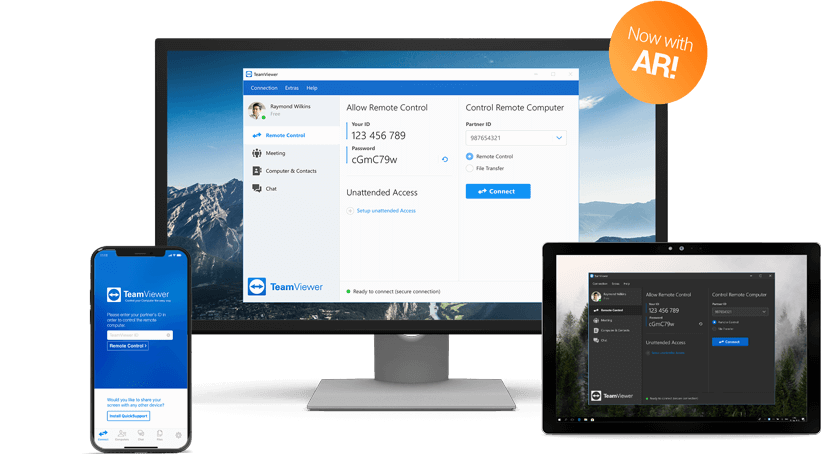
Enterprise, corporate and tech support-fueled organizations adore TeamViewer — and for many reasons. One reason is its compatibility with all major OS and mobile platforms (macOS, Windows, Linux, Android, iOS, and even Chrome OS).
Another exciting element of TeamViewer is its UI design. This remote access interface provides an intuitive and modern experience unlike many of the competitors we’ve experimented with.
While TeamViewer’s full-featured version is most ideal for large-scale organizations, they provide a free (non-commercial-use-only) version that limits features but still provides an excellent and effective remote access experience.
Features
ConnectWise Control offers two products to choose from: Access and Support.
The Access options allow unlimited users to connect with your remote devices — making it an excellent work-from-home solution. And even though it lacks remote tech support features, the Access plan is usable during routine tech support tasks involving most (if not all) machines.
Such routine tech administration situations include uploading files to more than one machine at a time, and performing software updates.
ConnectWise Control lets technicians execute remote troubleshooting for remote machines. The Support license means users (like IT support specialists) can offer all of the same services as the Access plan, with the addition of live (voice-chat included) remote tech support.
The Support license comes at a higher cost than an Access license, and only those with dedicated tech support teams should invest in it.
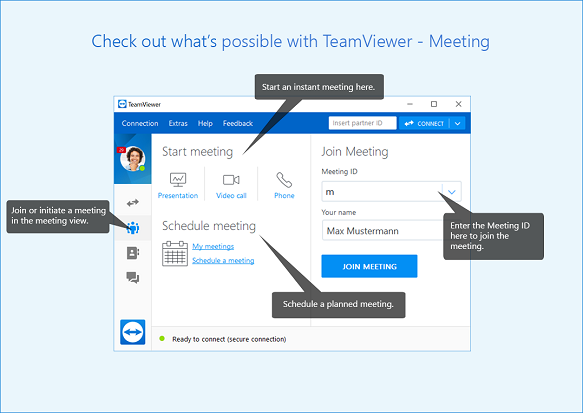
Users can see the real power of ConnectWise Control’s Support version when creating remote meetings. This is because CWC’s Support license allows for unlimited attendees.
Additionally, everyone in attendance has the ability to record the session, screenshot the presenting screen, and engage via voice or built-in chat options. This option is exceptional for training, meeting hosting, and numerous tech support processes.
The Key Features Of TeamViewer
At its most fundamental level, TeamViewer gives users easy-to-use remote access and screen sharing tools. However, TeamViewer also provides many additional features that really help it stand out from the competition.
One such advantage is TeamViewer’s streamlined cross-platform accessibility. In other words, TeamViewer makes it easy for users to access a remote computer/device, regardless of the OS they’re using to remotely connect.
TeamViewer also permits multiple users (like tech support professionals) to simultaneously log in to a single remote desktop session — which ensures expedited resolution even when dealing with the more complicated tech issues.
TeamViewer’s UI also offers users easy and efficient file transference between devices. Simply use the “File Transfer” setting, and establish a connection by following the prompts.
Lastly, TeamViewer supports numerous IoT and network devices, allowing for simplified management and monitoring of any devices sharing the network.
| Features | ConnectWise Control | TeamViewer |
|---|---|---|
| File Transfers | ||
| Session Recording | ||
| Audio Support | ||
| Session Transfers | ||
| Remote Printing | ||
| USB Sharing | ||
| Real-Time Chat Options | ||
| Mobile Accessibility |
Interface Comparison
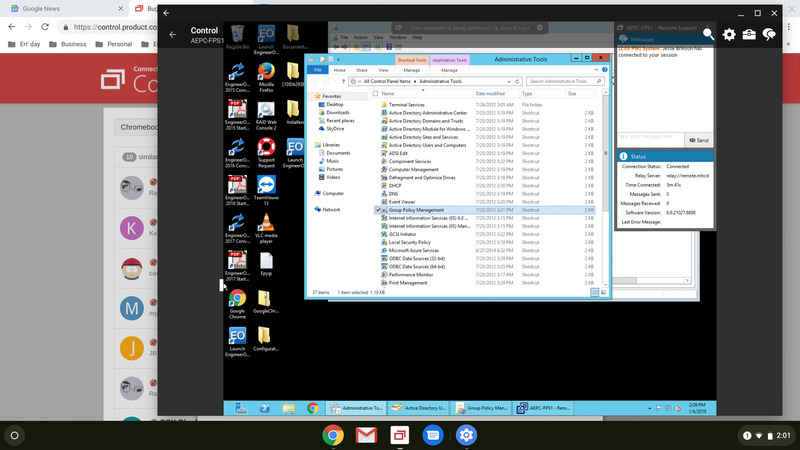
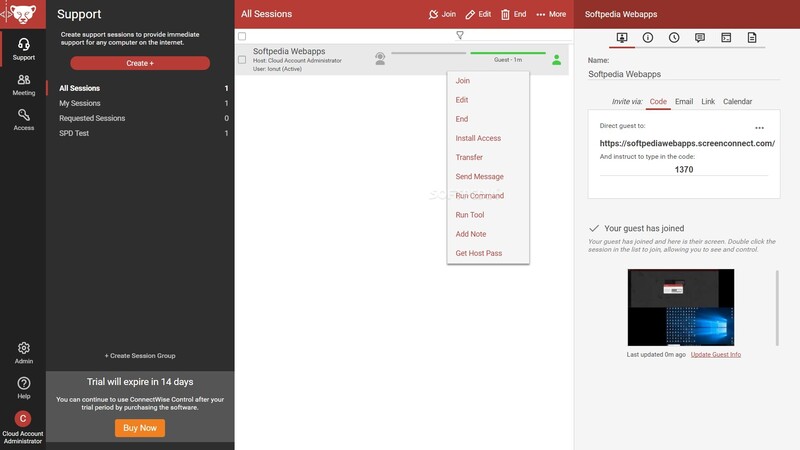
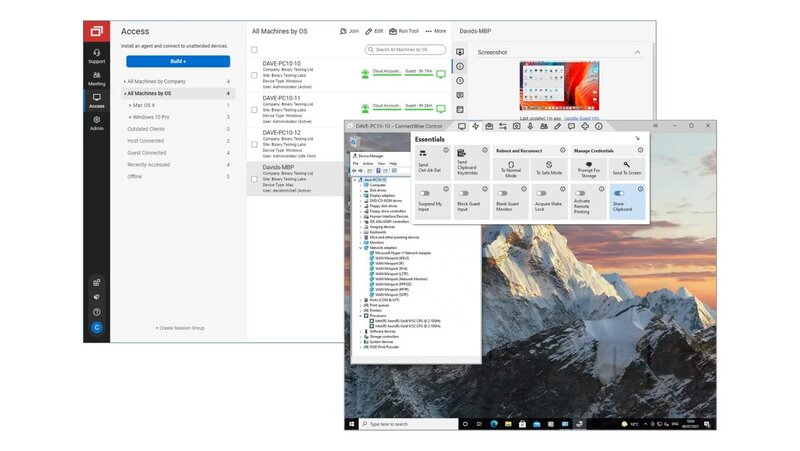
ScreenConnect (formerly ConnectWise Control) uses a session-first interface built around a device list and a toolbox of in-session tools: file transfer, command line, backstage access, and reporting. It has a lot of options, but several reviewers describe it as dated and hard to onboard onto compared to newer remote access tools. Some users also report that ConnectWise moves or changes features between releases without much notice, which adds to the adjustment period.
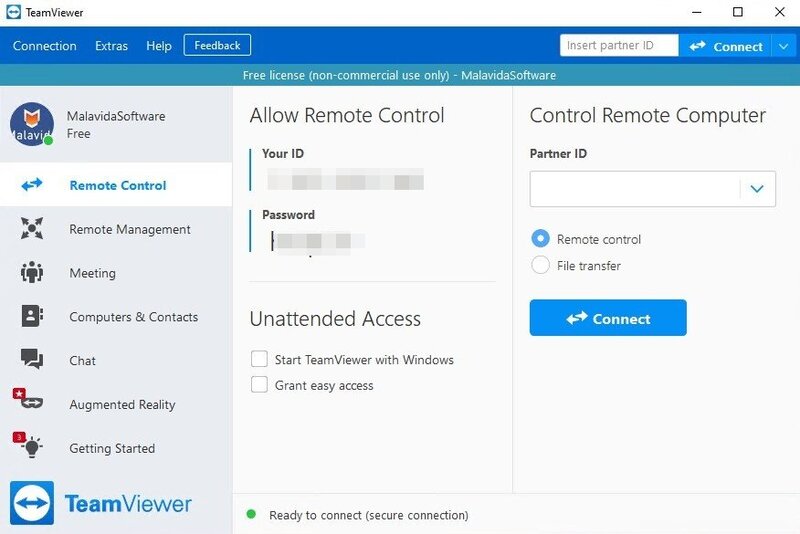
TeamViewer uses a session-first interface too, with tabs for active connections and side panels for chat, file transfer, system information, and remote management tools. The redesigned TeamViewer Remote interface differs substantially from the classic client, and the option to revert to the classic layout was removed in newer releases. This has generated sustained criticism from long-time users, particularly around navigation efficiency and the learning curve.
Operating Systems
ConnectWise Control and TeamViewer both provide support for all major operating systems (see table below), and users will greatly benefit from taking time to compare alternative options like Splashtop and ConnectWise Control when it comes to accessing home computers from a different (remote) location.
| Operating System | ConnectWise Control | TeamViewer |
|---|---|---|
| Windows | ||
| macOS | ||
| Android | ||
| Linux | ||
| iOS & iPadOS | ||
| Chrome OS | ||
| RaspberryPi |
Pros and Cons
Below we’ve outlined the pros and cons of both TeamViewer and ConnectWise Control. Users can now compare these factors with what ConnectWise Control and LogMeIn offer to solidify the best choice for their needs.
TeamViewer
Pros
- Available free version (but only for non-commercial-use);
- Minimalistic and user-friendly Graphical User Interface (GUI);
- High-speed connections;
- Cross-compatible OS support (Windows, Mac, Linux, Chrome OS, Android, iOS, and Blackberry OS);
- Full functionality on macOS and Windows devices;
- Two-factor authentication, and powerful 256-bit AES encryption security.
Cons
- Can’t view two remote systems simultaneously;
- Added expense for mobile access.
ConnectWise Control
Pros
- Available VoIP audio for meetings, as well as access and support sessions;
- Optional browser-based live stream support via the end user's smartphone camera;
- Support professionals can capture sound from guest devices to expedite troubleshooting.
Cons
- The full list of communication tools are only available on certain subscriptions plans;
- Mobile features aren’t supported across all devices/OS.
Price
TeamViewer and ScreenConnect (formerly known as ConnectWise Control) take different approaches to pricing. TeamViewer keeps a free plan for personal use and layers paid tiers on top. ScreenConnect has no free plan at all, but gives new users a 14-day trial instead of the 7 days it used to offer.
Teamviewer
TeamViewer still offers a free plan for personal, non-commercial use, with no limit on how many personal devices you can connect to.
Remote Access — $24.90/month. Entry-level plan for individual use. Covers up to 3 work devices for a single user.
Business — $50.90/month. For one user managing a larger device pool. Includes 1 user license and access to 200 devices.
Premium — $112.90/month. Built for scaling teams. Includes 15 user licenses, access to 300 devices, and administration tools such as session recording.
Corporate — $229.90/month. For larger IT departments. Includes 30 user licenses, access to 500 devices, and up to 3 simultaneous remote sessions.
Tensor — custom pricing. For enterprises with specialized security and integration needs. Priced on request.
ScreenConnect (formerly ConnectWise Control)
ConnectWise rebranded ConnectWise Control as ScreenConnect. It does not offer a free plan, but new users can try it free for 14 days. After the trial, ScreenConnect is priced per concurrent technician, billed annually:
- • One — $30/month: 1 concurrent session, 10 unattended access agents included
- • Standard — $45/month: up to 3 concurrent sessions per technician, unlimited unattended access agents
- • Premium — $55/month: up to 10 concurrent sessions per technician, adds video auditing, a report generator, and a remote diagnostics toolkit
Unattended access can also be licensed on its own, separately from these support plans, starting at $33/month (billed annually) or $41/month (billed monthly).
| Plan Options | ScreenConnect | TeamViewer |
|---|---|---|
| Free Version |
|
|
| Free Trial | 14 days | |
| Level 1 | $30/month | $24.90/month |
| Level 2 | $45/month | $50.90/month |
| Level 3 | $55/month | $112.90/month |
| Level 4 | N/A | $229.90/month |
| Level 5 | N/A | Custom pricing (Tensor) |
Conclusion
ConnectWise ScreenConnect is a strong fit for MSPs and IT departments needing a customizable support toolkit. Backstage mode, the extension marketplace, and on-premise deployment set it apart from most alternatives. No free tier is available.
TeamViewer is the better option for organizations requiring broad OS and mobile coverage with enterprise integrations and compliance certifications. The free tier is restricted to personal use with documented commercial-use enforcement. Paid plans meter work by concurrent channel rather than technician headcount.
HelpWire covers the needs of IT support teams and solo providers who want a free business-ready tool with operator-seat licensing. Backstage mode, session recording, and a mobile app are not included.