

Deciding between LogMeIn Pro remote access vs TeamViewer? Here’s what you need to know.
Although both platforms are popular in the remote desktop market, they serve different operational requirements, organizational scales, and technical demands.
• Gain a clear understanding of the core differences between LogMeIn Pro and TeamViewer across remote access and IT support use cases
• Explore how TeamViewer vs LogMeIn Pro differ in their approach to remote access, collaboration tools, security measures, and integrations
• Understand how LogMeIn Pro and TeamViewer differ in licensing and pricing to choose the most cost-effective solution for your use case.
• Determine which solution better aligns with your workflow, from simple unattended access to comprehensive, team-oriented remote support capabilities.
Overview
LogMeIn Pro and TeamViewer are reputable remote access solutions that provide secure and reliable connectivity to remote computers virtually from anywhere in the world.
TeamViewer is built primarily around IT support workflows and technician licensing models. On the other hand, LogMeIn Pro takes a productivity-driven approach, useful for power users, individuals, and small businesses who need consistent access to their machines.
LogMeIn Pro
Ideal for: Users looking for reliable unattended remote access without the overhead of IT service workflows. It’s designed for power users, small businesses, and individual users.

LogMeIn delivers reliable and seamless remote access for business productivity and IT management.
LogMeIn Pro is built with a focus on simplicity, dependable performance, and improving daily productivity. The platform provides secure cross-device access, remote printing, multi-monitor functionality, and file management tools to support efficient and flexible work from anywhere. It suits professionals and small teams who prioritize consistent unattended access, rather than organizations managing layered help desk or MSP operations.
TeamViewer
Ideal for: IT professionals and companies seeking advanced remote access capabilities, strong collaboration features, and seamless cross-platform compatibility.

TeamViewer enables fast, secure remote access for support, meetings, and collaboration.
TeamViewer is a widely recognized remote access platform designed for remote device control, ongoing system maintenance, and IT support operations. It is backed by extensive cross-platform compatibility and serves as a go-to solution in business environments for troubleshooting, collaboration, and long-term system oversight.
Features
LogMeIn Pro vs TeamViewer features include important remote access needs, but they take different approaches. LogMeIn Pro focuses on delivering fast, stable access for individuals and businesses. On the other hand, TeamViewer is more oriented toward collaborative IT support environments.
1. Remote Access & Session Management
LogMeIn Pro offers secure and unattended remote access to computers from desktop browsers, tablets, and mobile devices. Users can initiate sessions at any time without requiring remote-side authentication or session approval. The platform delivers smooth session handling and reliable performance for long-duration work sessions, instead of short-term support interactions alone.
TeamViewer allows users to experience both unattended and attended access. It also offers remote reboot and session recording to its users. Furthermore, the tab-based interface improves multitasking by allowing users to easily switch between multiple live connections. In its premium plan, you’ll find multi-user access and session transfer features that allow technicians to hand off active sessions. This is ideal for help desk teams and MSPs.
2. Collaboration & File Sharing
LogMeIn Pro offers built-in file transfer, so that users can easily move files from local to remote machines and vice versa, without initiating another session. This makes the platform ideal for daily work needs, such as updating files, syncing data across locations, or retrieving documents. The software also supports remote printing of files from a remote device to a local printer.
TeamViewer offers modern collaboration tools so that users can talk with each other, join voice or video calls, and collaborate on annotating a whiteboard. It also provides a fast and user-friendly drag-and-drop file transfer option, along with remote printing functionality to keep document workflows smooth. Premium users can collaborate in a single session with multiple technicians. This way, teams can resolve issues more quickly and effectively.
3. Customization & Branding
LogMeIn Pro primarily focuses on a ready-to-use and consistent experience, while keeping customization minimal. It doesn’t stress much on client-facing customization or white-label branding. This makes the platform ideal for internal business use, instead of managed service providers.
TeamViewer offers expanding branding options with powerful advanced functionalities. It provides Host modules and customizable QuickSupport that allow companies to add their brand colors, logo, and messaging. The platform is an ideal solution for IT service providers who handle clients directly because of its advanced capabilities.
4. Performance & Ease of Use
LogMeIn Pro is built to be user-friendly, and offers a smooth setup process and fast onboarding. The interface is simple, which gives non-technical users an advantage in working remotely with the essential setup. The software offers stable performance even during longer remote sessions.
TeamViewer comes with more advanced features, so non-technical users need a bit more time to understand these features. Its performance remains steady even in longer distances, and technicians can swiftly use monitoring, file sharing, and device controls.
5. Team & Device Management
LogMeIn Pro gives users the ability to manage multiple computers through a single account, according to the selected subscription. Access rights are linked to user subscriptions that allow small teams to scale easily without complex administration.
TeamViewer Premium provides teams with a centralized management console to organize endpoints and configure access rules. They can use the software to access remote devices and interact with other people across devices. Additionally, the software supports multiple users working simultaneously and transferring sessions between technicians. Users can have the ability to group devices. Because of these features, TeamViewer serves as a powerful tool to manage IT infrastructure in organizations of any size.
Feature Comparison: LogMeIn Pro and TeamViewer
| Feature | LogMeIn Pro – Power Users | LogMeIn Pro – Small Business | TeamViewer Business | TeamViewer Premium |
|---|---|---|---|---|
| Unattended Remote Access | ||||
| File Transfer | ||||
| Remote Printing | ||||
| Multi-Monitor Support | ||||
| Max Managed Computers | Up to 5 | Up to 10 | Up to 200 | Up to 300 |
| Concurrent Sessions | 1 | 1 | 1 channel (up to 3 sessions) | 1 channel (up to 10 sessions) |
| Session Transfer | ||||
| Session Recording | ||||
| Chat / Communication | Basic | Basic | ||
| Device & User Management | Basic | Basic | Basic | Advanced |
| Role-Based Access Control | ||||
| Branding / White Label | ||||
| Automation / Scripting | ||||
| USB Device Redirection | (OS-dependent) | (OS-dependent) |
Interface Comparison
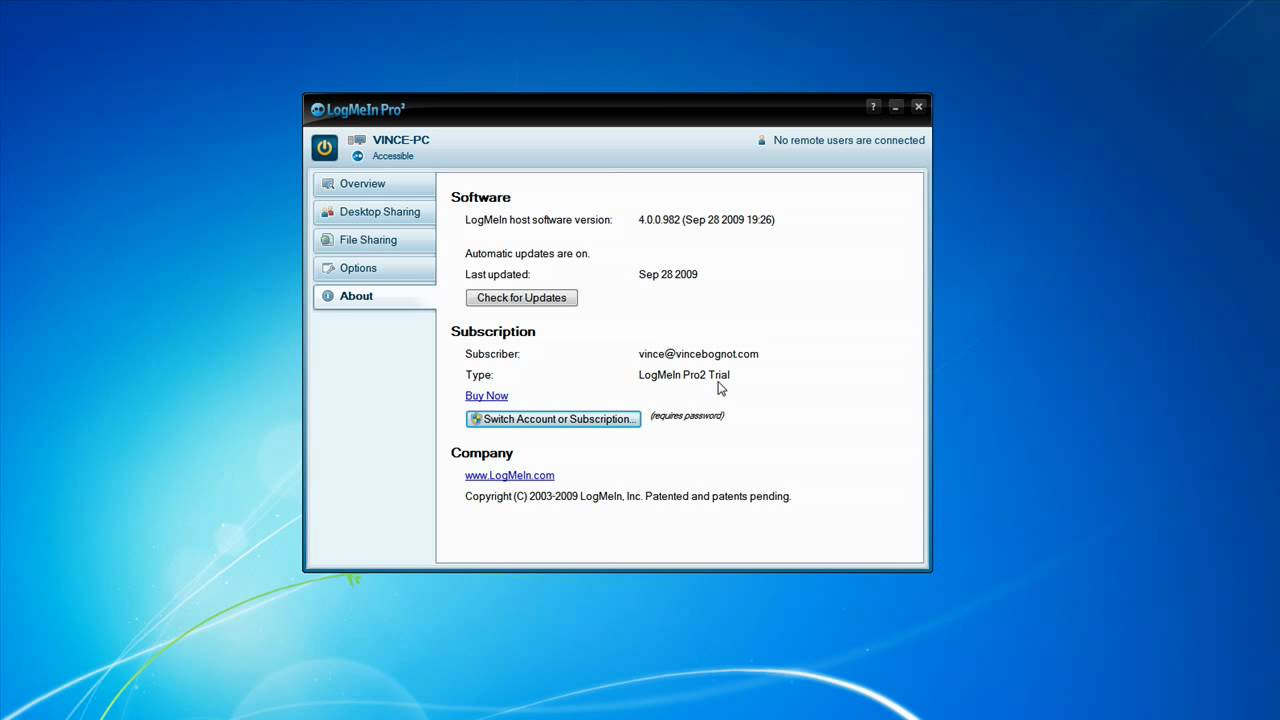
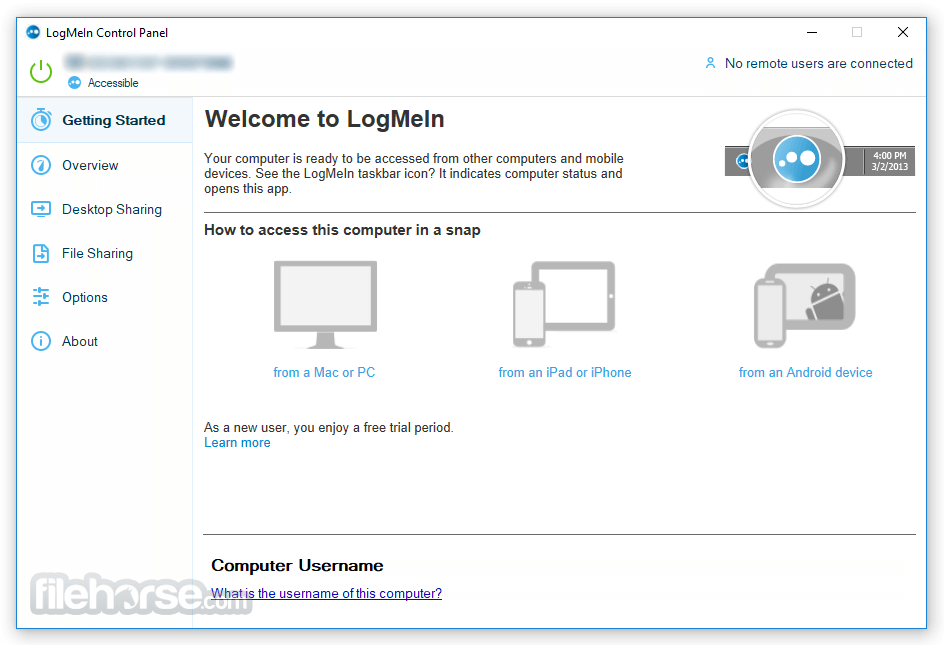
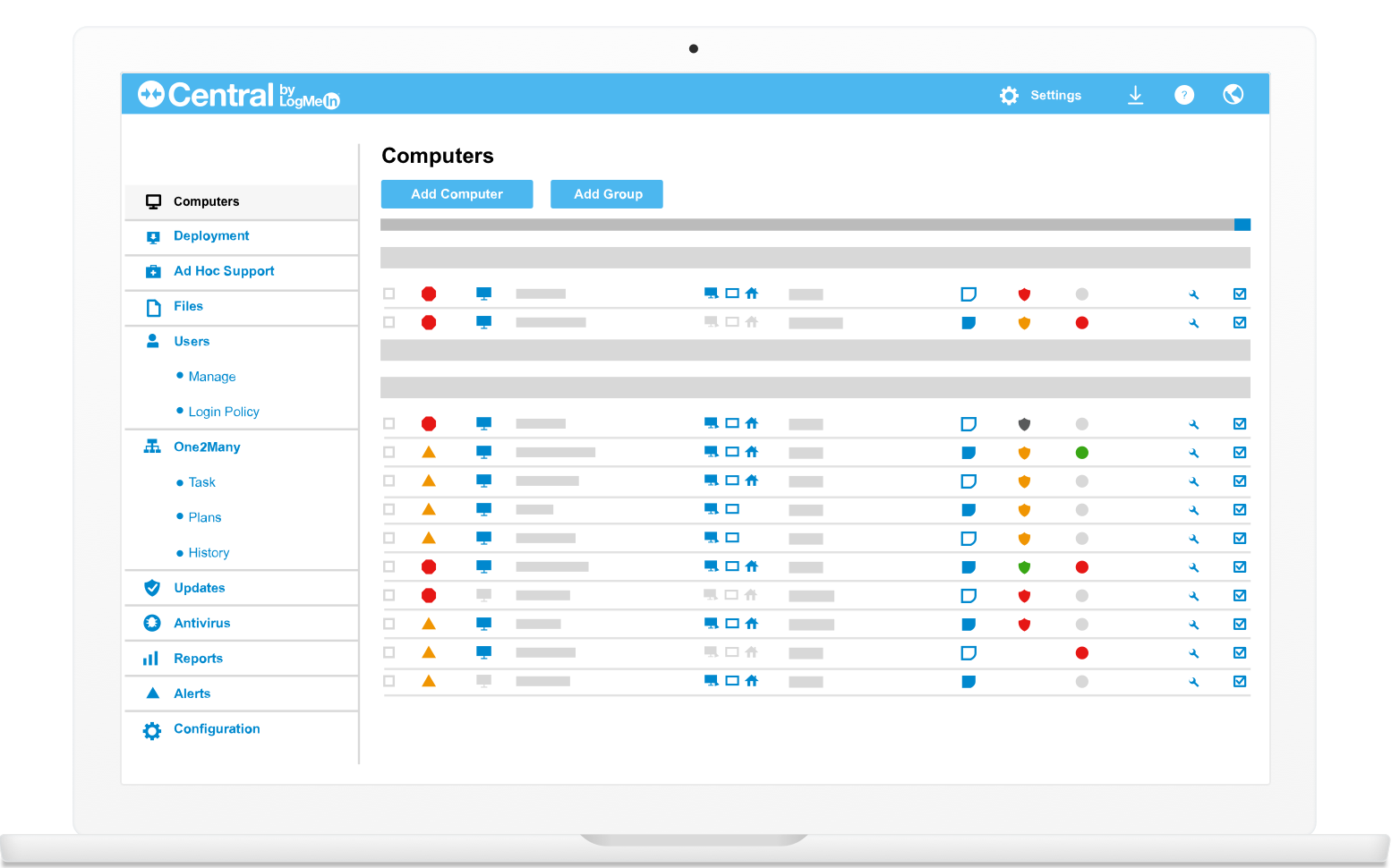
LogMeIn Pro features a clean and productivity-focused interface built for users who need reliable access to their own devices or company computers. The interface is easy-to-use, and key features, such as file transfer, multi-monitor switching, and printing, are easy to access.
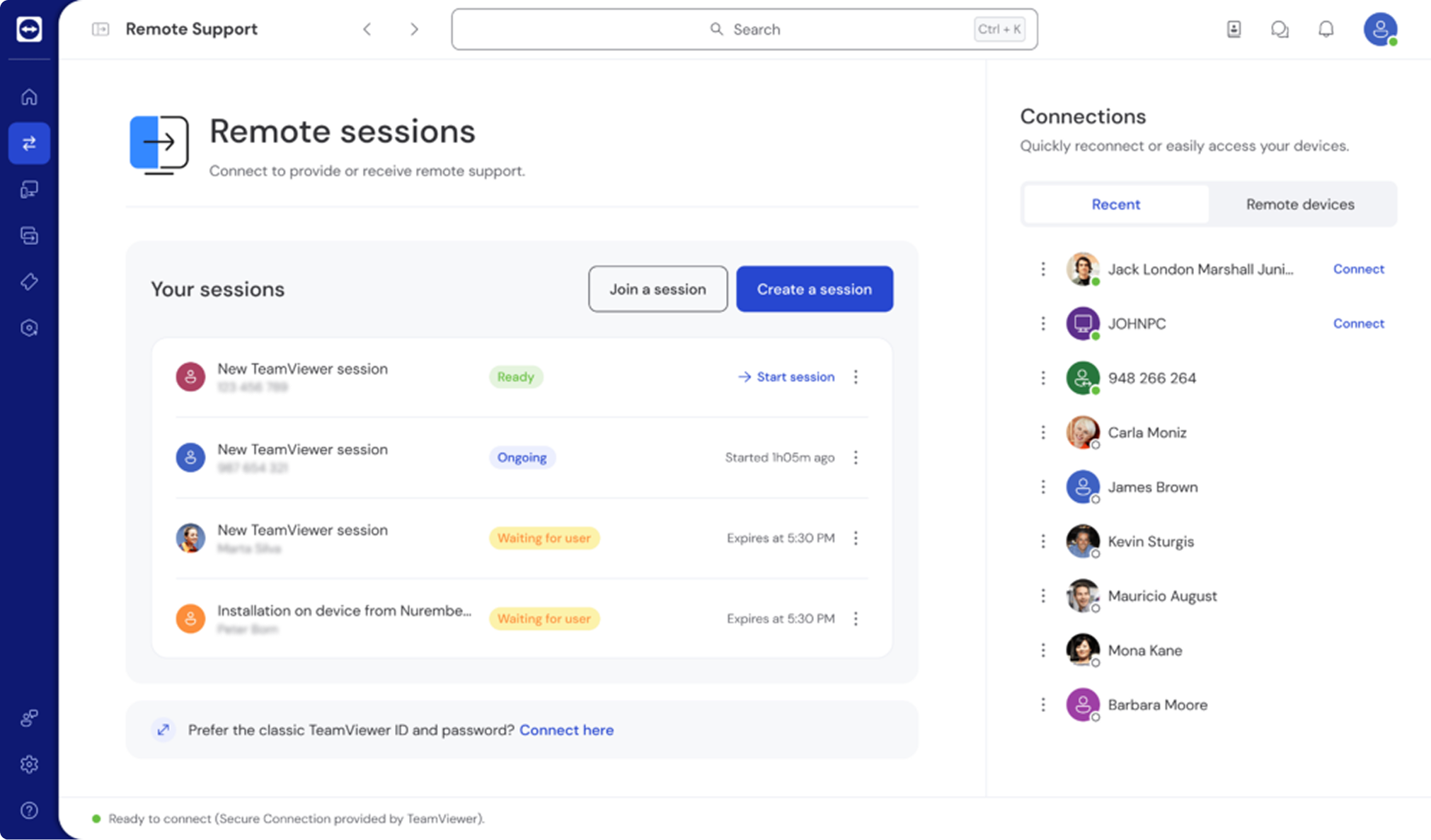
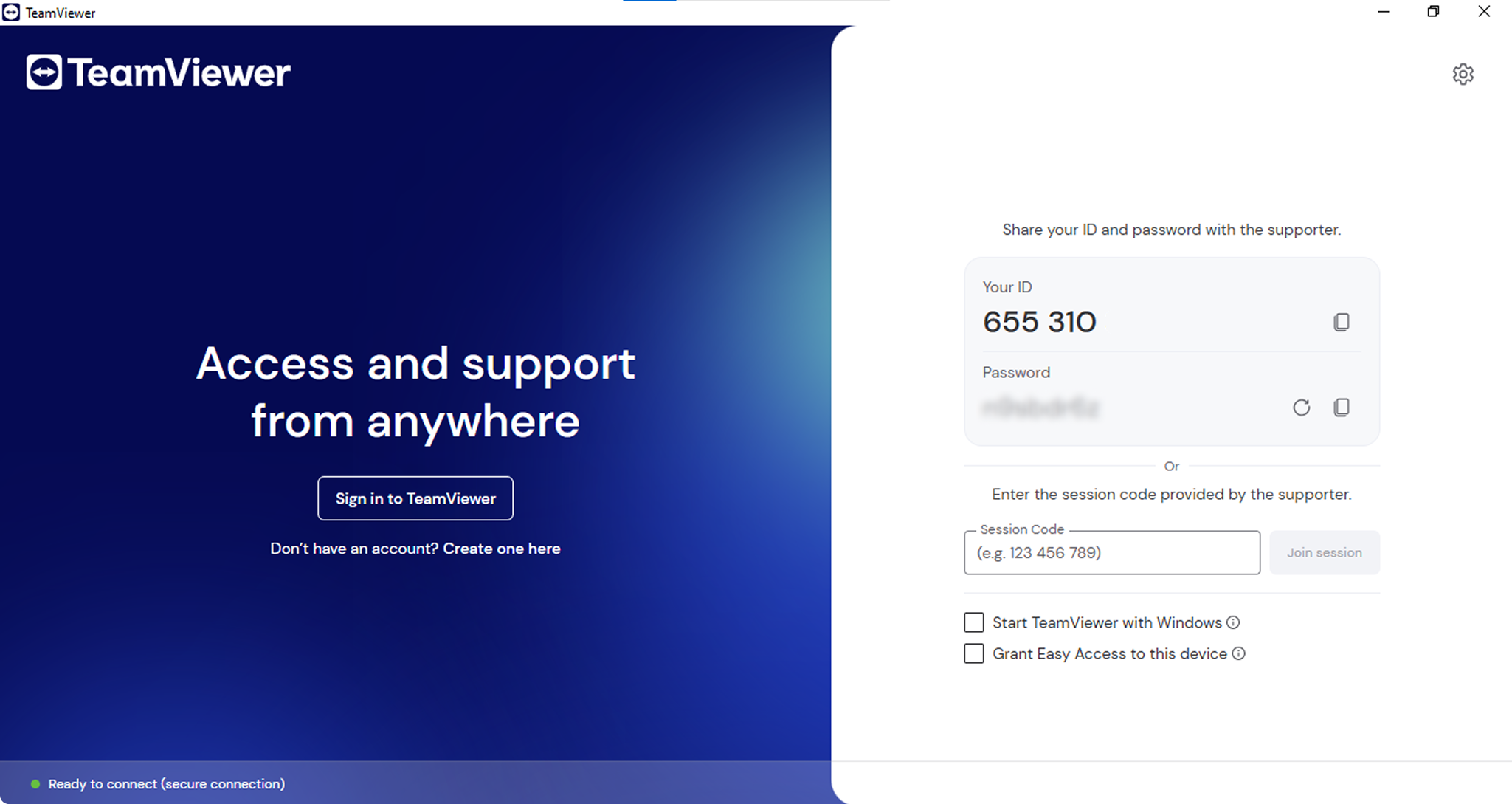
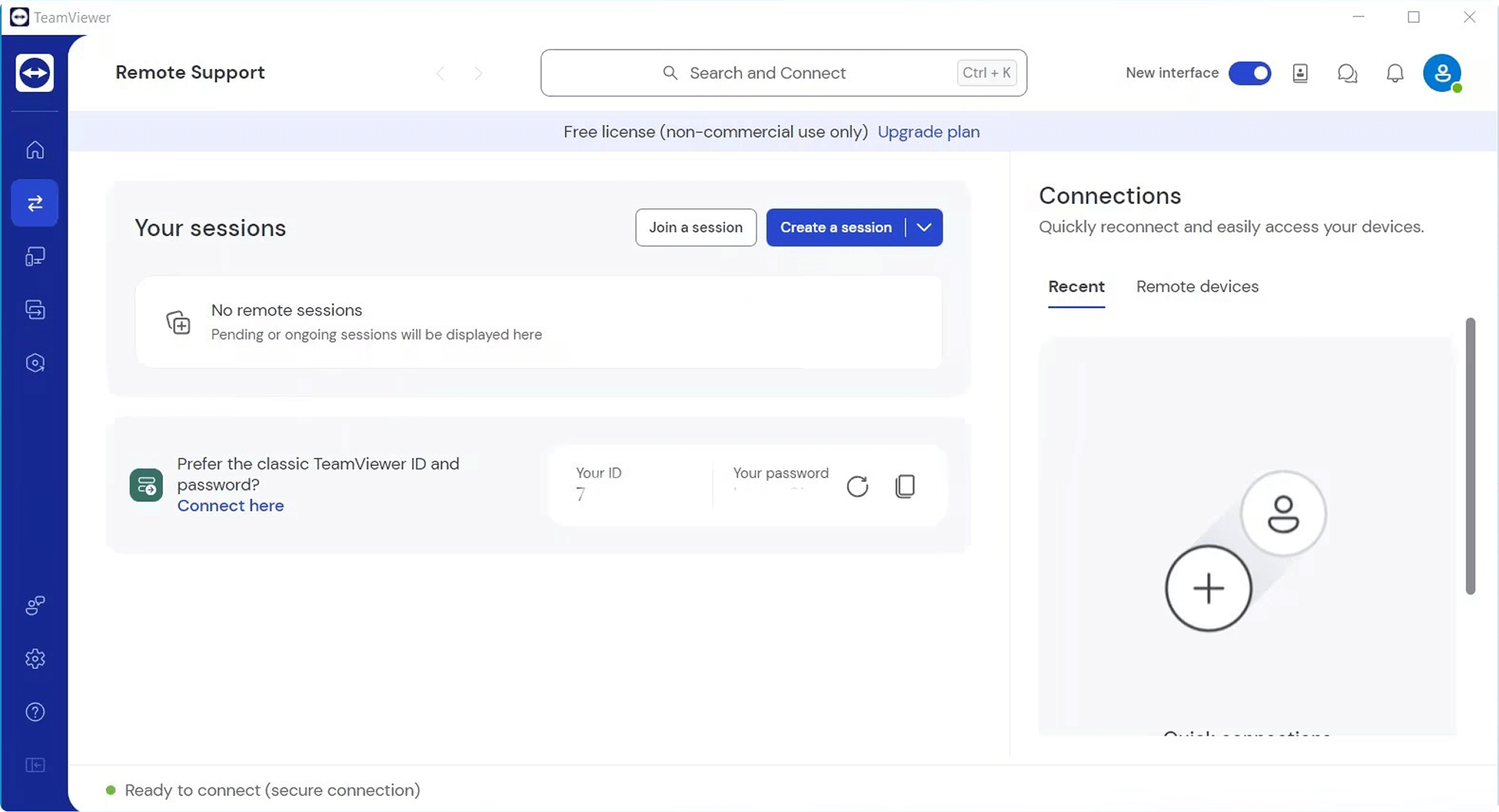
TeamViewer offers a fully featured interface, especially designed for technical users. Its tab-based sessions let technicians manage different connections at the same time, using file transfers, administrative tools, system information, and quick access to chat.
Operating System Support
To choose a reliable remote access platform for your business, it is necessary to understand the platform’s compatibility with your devices.
| Operating System | LogMeIn Pro | TeamViewer |
|---|---|---|
| Windows | ||
| macOS | ||
| Linux | ||
| Android | ||
| iOS | ||
| Chrome OS | Browser-based | Limited (web client) |
| Raspberry Pi | (ARM version) | |
| FreeBSD | (limited support) |
Security
Security always plays a major role when you need to access business-critical systems remotely over the internet. Let’s go through LogMeIn Pro vs TeamViewer security to understand what security framework they are using.
LogMeIn Pro
LogMeIn Pro is built to deliver secure and reliable remote access for standard business and professional use. Instead of relying on advanced enterprise security structures, it prioritizes account-based security and encrypted communication. It provides several measures to protect remote sessions, including:
• Encrypted remote access sessions: To secure data in transit between local and remote devices, all remote connections are protected using encrypted communication channels.
• User account authentication: Only authorized users can start remote sessions. For this, remote device access is managed via authenticated LogMeIn user accounts.
• Access controls for unattended systems: Using the feature of unattended access, you don’t have to manually approve each remote connection session, but you can still preserve access permissions. All the devices that you add to your LogMeIn Pro account will have this secure, unattended access feature.
• Device access management: A centralized dashboard allows users to manage connected computers from their single account. This offers clearer visibility and control over which devices you can access remotely.
• Remote security controls: LogMeIn Pro protects remote sessions from unauthorized interception to give you a secure and stable environment for extended remote sessions.
• Built-in device security: All LogMeIn Pro plans come with LogMeIn Antivirus. It provides an additional layer of protection for managed devices against malware and common threats.
• Common security architecture across tiers: Individuals, small businesses, and Power Users plans include the same security features. Licensing tiers limit how many computers can be accessed, while security remains the same.
• Multi-factor authentication (MFA): LogMeIn Pro enables two-factor authentication using email verification or a mobile authenticator app, such as LastPass Authenticator and Google Authenticator. This process adds an extra layer of security that requires a second verification step after entering the password.
TeamViewer Premium and Business
TeamViewer is known for its powerful security framework and is designed to support large-scale remote connections and meet corporate compliance requirements. To secure your remote sessions, it offers:
• Advanced AES-256 encryption: TeamViewer applies AES-256-bit end-to-end encryption to all your remote session data to maintain its confidentiality.
• Two-factor authentication (2FA): TeamViewer supports two-factor authentication (2FA). Users need to confirm their login with a code from an authenticator app or SMS.
• Device verification and whitelisting: Administrators must approve new devices before access is granted. Admins ensure that only authorized hardware can connect.
• One-time password (OTP): Users can log in using one time password (OTP) to connect easily with remote devices.
• Session tracking and audit records: With this security feature, organizations can track what users do while meeting compliance standards. Teams can also use them for training purposes.
• Enterprise certifications: TeamViewer complies with GDPR, HIPAA, SOC 2, ISO 27001, and other necessary compliance requirements.
• Advanced access management: Admins define security policies and control users’ access levels. They can structure and manage devices across teams and departments.
Usage Scenarios
LogMeIn Pro and TeamViewer handle various real-world workflows based on team size and technical requirements.
LogMeIn Pro Usage by Plan
• Small Business Plan: This plan targets small teams and businesses that need stable remote access to several machines without the resource usage of complex IT administration. It works well for small businesses that require always-on and reliable access to their office systems, while keeping management and deployment simple.
• Power Users Plan: This plan is built for professionals who oversee several computers and need reliable multi-device access. This plan supports growth while keeping licensing clear and manageable. It is the most practical option for advanced individuals or professionals working across multiple workstations, office locations, or laptops.
TeamViewer Usage by Plan
• Remote Access provides effective solutions for professional workers who need to access three personal or work devices throughout the day from any location.
• Business plan enables a single IT professional to manage 200 devices while using remote access through one active connection.
• Premium plan provides complete operational functions that enable small and medium-sized IT teams to work together because they need to support their workflow processes. The shared license permits up to 15 users to access the software while one connection channel enables ten users to use different tabs at the same time. The service provides session recording and outgoing connection reporting features which make it suitable for managed service providers who need to work with multiple clients.
• Сorporate product enables multiple technicians to access it at the same time from different locations. Three independent connection channels support up to 15 simultaneous sessions, enabling parallel support operations across teams and client environments.
Integration
Businesses that rely on connected tools and automated platforms look for remote access software that supports multiple integrations, such as ITSMs, third-party systems, and CRMs. However, some businesses need more simplicity in operations than plenty of integration options.
| Integration Feature | LogMeIn Pro – Power Users | LogMeIn Pro – Small Business | TeamViewer Business | TeamViewer Premium |
|---|---|---|---|---|
| API Access | Basic | Advanced | ||
| ITSM Integration | Basic | Extended | ||
| CRM Integration | Partial | Broader support | ||
| Workflow Automation | Basic | |||
| Third-Party App Compatibility | Limited | Limited | Basic | Broad |
| White-Label Branding | ||||
| Admin Console / User Management | Basic account dashboard | Basic account dashboard | Console | Full console |
| Ticketing Support | Basic | Extended | ||
| SDK / Developer Tools | Limited | More extensive |
LogMeIn Pro Power Users & Small Business Integrations
• Small Business: LogMeIn’s Small Business plan is designed for teams that require reliable remote access without complex system integrations. In this plan, you’ll not find CRM or ITSM integrations and advanced APIs for automation. This plan is the best option for simple business workflows where remote connectivity is the core requirement.
• Power users: LogMeIn’s Power Users plan is designed for individual professionals and advanced users who manage multiple devices using a single account. This plan is similar to the Small Business plan, where integration capabilities are limited. There is no built-in support for CRM systems, ITSM platforms, and automated ticketing workflows.
TeamViewer Premium & Business Integrations
• Premium: TeamViewer’s Premium plan offers more flexible and broader integration features, such as APIs. It can easily integrate with IT service management (ITSM) and CRM platforms that enable automated workflows, cross-system collaboration, and ticket creation.
• Business: TeamViewer’s Business plan offers basic API access and limited third-party software connections. This plan is suitable for small teams or individual technicians. You can utilize more advanced integrations and automation capabilities in its higher tiers, such as Corporate and Tensor.
Pricing
Pricing plays an important role in selecting a remote access solution, particularly as costs can grow based on feature requirements, usage needs, and team size. Below, we discuss LogMeIn Pro vs TeamViewer pricing plans along with a side-by-side comparison table to help you choose the best option for your specific needs.
LogMeIn Pro Pricing Plans
• Individuals ($30/month): This plan is suitable for individual users who need reliable remote access to a small set of devices. It allows users to access up to 2 devices at a time and includes the necessary features.
• Power Users ($70/month): This plan is intended for professionals who need to manage multiple workstations or computers and require a stable remote access across different systems. It supports remote access up to 5 devices and also provides the necessary features.
• Small Businesses ($129/month): This plan is designed for small teams that require consistent and reliable remote access to various devices without complex IT administration. It allows teams to access up to 10 computers.
TeamViewer Pricing Plans
TeamViewer offers several license options suitable for personal use to large-scale enterprises:
• Free (Personal Use Only): Available at no cost for non-commercial use. Ideal for helping family or friends with technical issues. Sessions may be flagged and limited if commercial activity is detected.
• Remote Access — $24.90/month: Designed for a single user who needs reliable unattended access to up to 3 devices. Includes 1 concurrent connection and basic remote control features.
• Business — $50.90/month: Built for a single user managing up to 200 devices. Includes 1 connection channel, file transfer, and remote printing.
• Premium — $120.90/month: Supports up to 15 licensed users and up to 300 managed devices. Includes 1 connection channel, session recording, outgoing connection reporting, and phone support.
• Corporate — $245.90/month: Supports up to 30 licensed users and up to 500 managed devices. Includes 3 concurrent connection channels with up to 15 simultaneous sessions, incoming connection reporting, mass deployment, and Standard Integrations Package.
• Tensor — Custom pricing: An enterprise-grade plan for large organizations. Offers conditional access, SSO, advanced security controls, audit logs, and fully customized deployment. Pricing is available on request.
Pricing Comparison Table: LogMeIn Pro vs TeamViewer
| Pricing Tier | LogMeIn Pro | TeamViewer |
|---|---|---|
| Free Trial | ||
| Free Personal Use | ||
| Level 1 | $30/month | $24.90/month |
| Level 2 | $70/month | $50.90/month |
| Level 3 | $129/month | $120.90/month |
| Level 4 | (Not available) | $245.90/month |
| Enterprise | (Not available) | Tensor (Custom pricing) |
Possible Issues and Limitations
Despite the maturity and widespread adoption, both remote access platforms come with potential issues and limitations that can affect practical usage. These limitations may result from licensing models, operating system support, administrative capabilities, or network environments. To choose the best possible solution that best aligns with your workflows, budget expectations, and technical requirements, you need to first understand these restrictions.
LogMeIn Pro
• No support for Linux or Raspberry Pi: LogMeIn Pro only supports major desktop and mobile operating systems, such as Windows, macOS, iOS, and Android. However, it’s not compatible with the Linux-based environments or ARM-based devices like Raspberry Pi. Because of this, the platform is less suitable for server admins, IoT-related workflows, and development teams.
• Restricted collaboration capabilities: The platform emphasizes individual remote sessions and doesn’t offer advanced collaboration features, such as shared control between multiple users, multi-technician sessions, and built-in voice and video communication. Due to the absence of these features, real-time team-based troubleshooting or collaborative IT support becomes less effective.
• User-to-user session transfer is not available: Each LogMeIn Pro remote session is associated with 1 authenticated user account. The platform doesn’t allow sessions to be passed between users or technicians. This restricts its use in environments where issues need to be addressed immediately or transferred across team members.
• Basic administrative controls for enterprises: LogMeIn Pro doesn’t include basic admin controls, such as granular permission policies, role-based access control (RBAC), and advanced audit and compliance requirements. It offers basic device and access management, which makes the platform ideal for small businesses and individual professionals compared to larger organizations with strict compliance requirements.
TeamViewer
• Commercial activity detection: TeamViewer’s free trial is only for non-commercial use. So, it automatically ends remote sessions if it detects any commercial activity.
• Remote session constraints: The Business plan includes one connection channel that supports up to three simultaneous remote sessions opened as tabs. The Premium plan also operates on a single channel but allows up to ten concurrent sessions in tabs. The company requires customers to buy extra channels as add-ons or upgrade to the Corporate plan when multiple technicians need to connect from different devices at the same time.
• Network restrictions: Some corporate proxies or firewalls may block remote sessions from being established.
• Required software updates: TeamViewer periodically requires mandatory software updates, which interrupt ongoing long sessions.
• Version incompatibility: A connection may fail if the devices are running different or incompatible versions.
• Expensive pricing structure: TeamViewer’s higher plans provide advanced monitoring tools and features. It also offers enterprise integrations. They can be expensive for smaller organizations.
Pros and Cons
The advantages and drawbacks of LogMeIn Pro and TeamViewer are summarized in the tables below. This comparison is designed to help you evaluate their features, guiding you toward an informed purchasing decision. In this section, we emphasize the pros and cons of both platforms based on authentic user reviews. These insights come directly from feedback provided by individuals with hands-on experience using each solution.
Pros
- Provides reliable and straightforward unattended remote access for daily work
- Offers stable performance suited for extended remote sessions
- Enables connections from both desktop browsers and mobile devices
- Provides integrated file transfer between local and remote machines
- Supports multiple monitors for improved productivity and professional workflows
Cons
- Doesn’t support Linux, Raspberry Pi, and other ARM-based devices
- Collaboration capabilities are limited compared to IT support platforms
- The platform doesn’t allow multiple users or technicians in the same session
- Advanced administrative management tools, such as audit logs and RBAC, are not available
- There are no built-in CRM, ITSM, and ticketing system integrations
- Primarily built for smaller teams rather than MSPs or large IT organizations
TeamViewer:
“TeamViewer, the best software for your video conferences and work meetings”— Read full review
Pros
- Available at no cost for personal use
- Operates across various platforms, including IoT systems and ARM-based hardware like Raspberry Pi
- Offers powerful collaboration tools, such as VoIP, video calls, whiteboard, chat
- Works well with multiple sessions and gives you the ability to transfer them between technicians
- Provides comprehensive integration options with CRM, ITSM, automation, and APIs
Cons
- Best performance depends on a strong and stable internet connection
- Pricing across license tiers can be a challenge for smaller teams
- If device versions are mismatched, the connection may fail
- Mandatory software updates interrupt active sessions from time to time
- Premium and Corporate subscriptions are required for users to access advanced features
HelpWire: A Reliable Alternative to LogMeIn Pro and TeamViewer
LogMeIn Pro and TeamViewer are widely used platforms recognized for their dependable performance and advanced features. Although these platforms are used across different businesses, they often come with some limitations.
HelpWire poses as a reliable remote access alternative to LogMeIn Pro and TeamViewer, which is designed to remove these limitations. It is a next-generation remote desktop platform designed for speed, simplicity, and security that avoids the layered complexity common in traditional enterprise remote access software.
HelpWire is especially ideal for individuals, IT technicians, freelancers, and businesses seeking professional-grade remote support capabilities without expensive licensing models or complex administrative structures.
Key Features:
-
Responsive remote desktop performance:
HelpWire uses optimized streaming technology to deliver consistent performance on both fast and limited internet connections.
-
Multi-platform support:
-
Session recording and reporting:
HelpWire offers built-in session recording and reporting tools that support compliance requirements, operational documentation, internal audits, and technician training.
-
Secure file sharing and live session chat:
HelpWire allows users to transfer files and communicate directly during active sessions to support workflows and streamline troubleshooting.
-
Access without requiring client installation:
With HelpWire, you can launch remote support sessions instantly using a secure browser link to eliminate setup time and reduce installation barriers for end users.
-
HelpWire allows consistent access to essential servers and workstations. This allows technicians to connect at any time without connecting with users.
-
HelpWire offers enterprise-grade security, such as two-factor authentication, Auth0-based identity management, and end-to-end encryption. This offers a high level of protection for user accounts and remote sessions.
LogMeIn Pro