Choosing the right remote desktop or remote support tool has a direct effect on your work every day. The tools you depend on influence how fast your team works and how well your systems are protected. It also affects how much you’ll spend as your needs grow.
Freelancers, internal IT teams, and service desks all benefit from the right solution, which allows quick connections without delays. It makes troubleshooting more straightforward. It also helps you stay organized as your workload increases.
- Compare TeamViewer vs Splashtop regarding their setup and licensing. You'll also see how their security differs.
- Figure out which platform matches your team’s size and workflow. You will also know what fits your industry needs (attended/unattended, multi-technician, mobile, etc.).
- Know the pricing, including what’s listed publicly versus quote-only, as well as where you’ll get the most benefit.
- Make a clear, evidence-based choice for the remote support tool that works for your situation.
Overview
In this remote desktop comparison, we’ll take a closer look at how these two popular tools position themselves in the market. Who each platform is built for and where it stands out most will also be covered. Seeing how they handle remote access and support helps you determine which one suits your team and how well it can grow with your needs.
Splashtop
Best for: Individuals, professionals, and small to mid-sized teams who want fast remote access with clear pricing and solid security, along with deeper hardware-level capabilities.

Splashtop focuses on delivering strong performance for remote access. It allows you to connect to computers from anywhere through a connection that’s fast and dependable, while also keeping your access secure. Instead of focusing mainly on traditional IT support, it leans more toward real-time control.
TeamViewer
Best for: Businesses of any size, from small and mid-sized companies to large enterprises, that need a full-featured SaaS platform for remote support and endpoint management.

TeamViewer has been a top software solution for remote access and support for a long time. It lets you run both attended and unattended sessions and collaborate with others. It even allows you to connect across the globe. On top of that, it offers a well-established set of integrations (ITSM, CRM, and identity). Licensing depends on the number of named users and how many connections can run at the same time, so you can scale it according to how many technicians need access.
Features
This part highlights Splashtop vs TeamViewer features, as well as how each solution performs in real-world use. We’ll show how each platform handles everyday remote work, supports collaboration, delivers performance, and manages teams.
1. Remote Access & Session Management
Splashtop supports unattended remote connections. This means you can reach your computer anytime without someone having to approve the session. Both plans for this software let you record sessions that you can use for training, compliance, or record-keeping. They even let two users connect to the same machine at the same time if they have separate licenses. Splashtop isn’t meant for managing lots of sessions at once in a large IT environment. It’s actually for steady, reliable access to personal or work devices for daily tasks.
TeamViewer allows both attended and unattended connections — making it easy to quickly access computers for troubleshooting or system management. It offers a recording option useful for documentation or training, too. Apart from that, a tabbed interface lets technicians oversee several remote connections at the same time.
2. Collaboration & File Sharing
Splashtop lets users collaborate in real time using chat during or outside of remote sessions. It translates to teams being able to coordinate before starting or while connected. The two plans of this software allow screen sharing through a web link for presentations, walkthroughs, or guiding someone remotely. The Performance plan adds more advanced functionality with USB device redirection. It makes local USB devices behave as if they were plugged into the remote computer. This supports more advanced workflows beyond simple file sharing.
TeamViewer uses drag-and-drop alongside clipboard syncing to make transferring files simple during a session. Sharing documents during a session becomes straightforward because of this. The tool also provides an option to print documents locally from a remote computer. Regarding collaboration, TeamViewer offers real-time chat, voice calls, and video calls. It even has tools teams can use to stay in sync and fix problems quickly.
3. Customization & Input Control
Splashtop puts more attention on precise input than on branding the interface. It lets you use a stylus during remote sessions and works with Wacom Bridge, so pressure sensitivity and tilt still work properly, plus your strokes stay precise during the session. The Performance plan offers these features, making it a strong choice for creative work and other tasks where input accuracy matters—including design and illustration—instead of branded IT support setups.
TeamViewer takes a different approach. It centers more on customizing how a session runs and controlling user interactions, rather than on accurate input handling. Users can adjust how each session works by changing permissions and control settings and also through different interaction tools. The platform also includes built-in chat, along with voice and video calling, which are helpful for instant communication during a session. These features help teams run organized workflows and provide professional remote support instead of handling tasks that need precise hardware input.
4. Performance & Ease of Use
Splashtop provides smooth remote streaming with very little lag alongside a straightforward, user-friendly interface. The Performance plan adds 4:4:4 color mode, so colors stay accurate, and images stay sharp. This makes it a good choice for design, media, or visualization tasks. In general, the software combines simplicity with professional-level performance, prioritizing stable connections and high visual quality over complicated IT management features.
TeamViewer is a remote access platform packed with features for remote access, and it guarantees fast and secure connections. Because it has many professional tools, it can take you a little time to get used to them. Still, its interface is clear enough for individual technicians and small teams. Aside from that, the app works well even with low bandwidth, though minor lag can sometimes happen. All in all, TeamViewer pairs reliable performance with advanced capabilities, which might feel more than needed for people who just want basic remote access.
5. Team & Device Management
Splashtop has a central web console where admins can manage users and groups and set permissions based on roles. The platform’s two plans allow multi-monitor setups, including multi-to-multi monitor configurations, for overseeing multiple screens at once. In general, Splashtop’s team and device management work well for small to mid-sized teams requiring safe access and oversight without the complexity of full enterprise tools.
TeamViewer offers a full device management system that lets administrators monitor, access, or even control remote devices across multiple computers. The platform lets administrators assign permissions according to each technician’s role while letting multiple users connect to a single device simultaneously. Using device groups lets you keep large numbers of endpoints organized and under control.
Feature Comparison: Splashtop and TeamViewer
| Feature | Splashtop | TeamViewer |
|---|---|---|
| Mobile Access | ||
| File Transfer | ||
| Concurrent Sessions | Two users into one computer (requires two user licenses) |
Business — 1 concurrent session Premium — up to 3 concurrent sessions |
| Session Transfer | ||
| Session Recording | ||
| Real-time Chat | (in-session & outside session) | |
| Remote Printing | ||
| Audio Support | (microphone passthrough – Performance) | |
| Device & User Management | Pro and above | Business and above |
| USB Sharing | (USB device redirection – Performance only) |
Interface Comparison
This Splashtop vs TeamViewer comparison looks at how each platform’s interface works and its effect on day-to-day remote access.
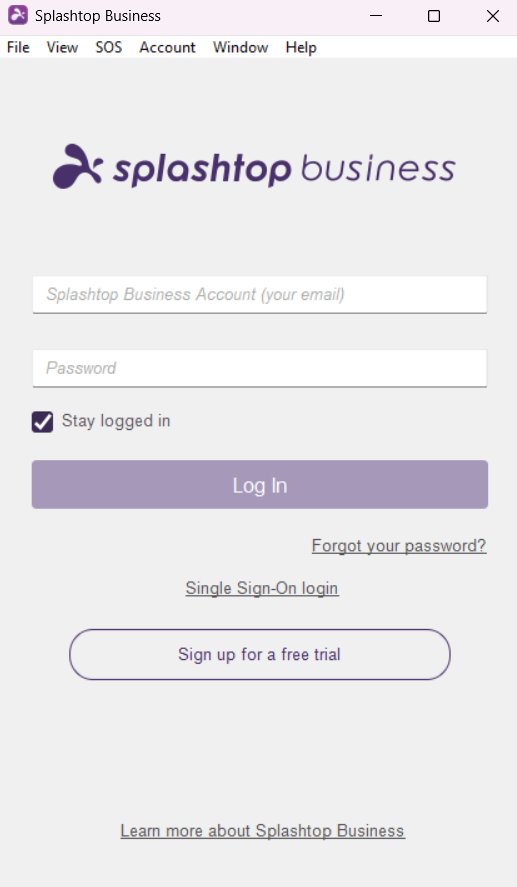
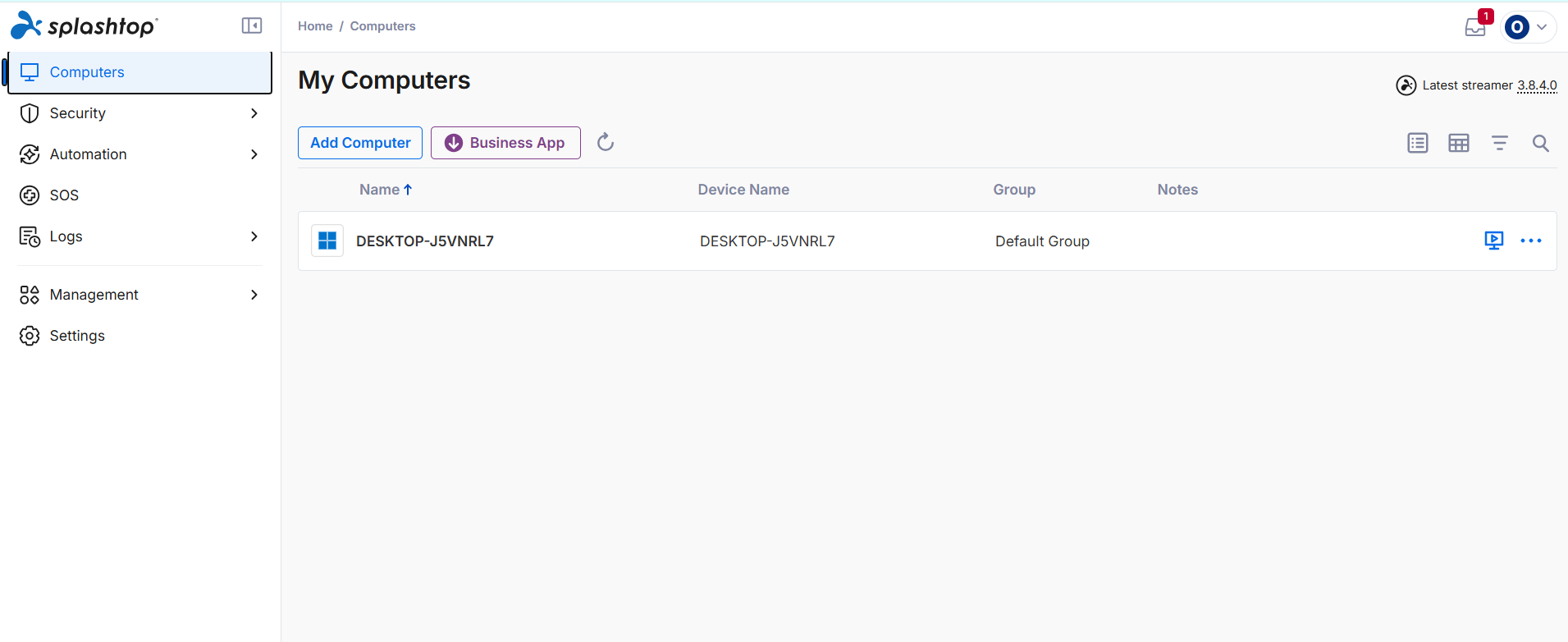
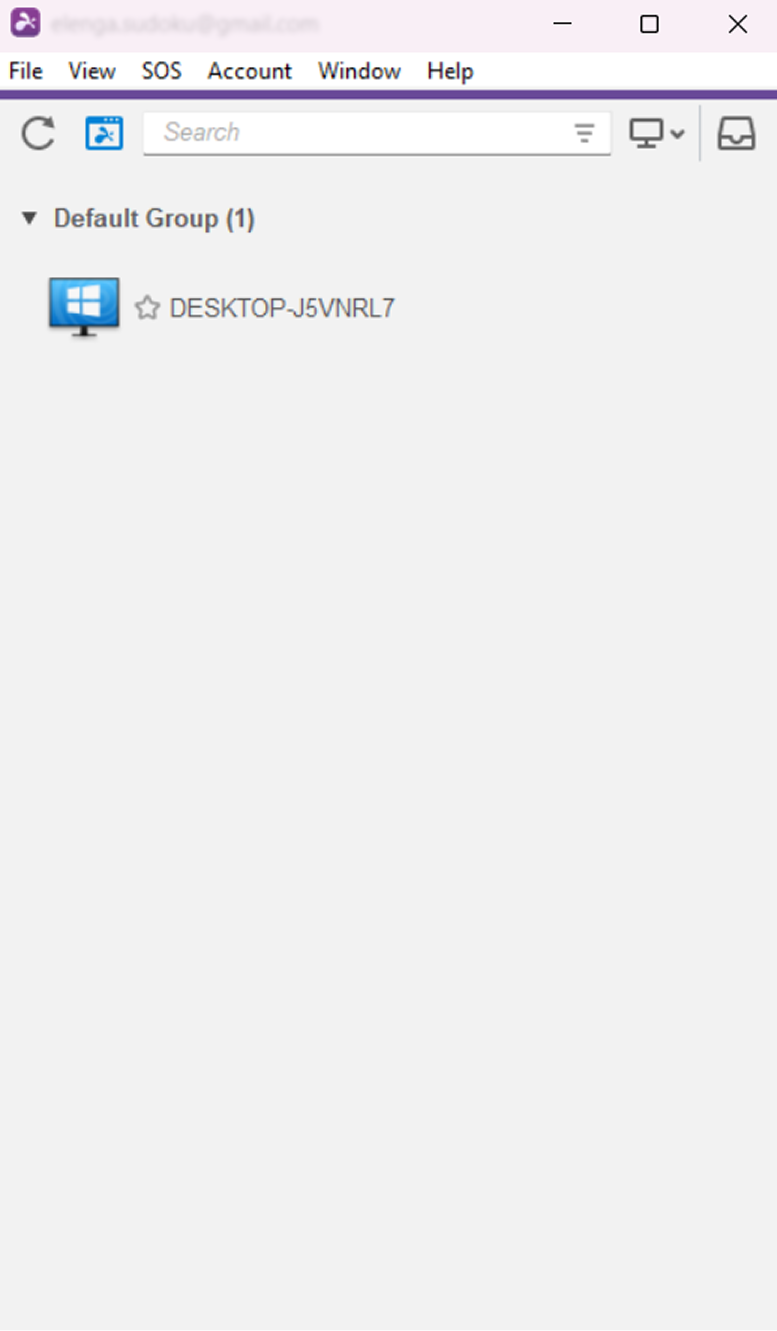
Splashtop provides a simple, fast interface that’s easy to use. Users can connect immediately and deploy agents, as well as start sessions without going through many configuration screens. It has a clean layout, and you can easily find its features. The platform’s goal is to let users get their work done smoothly.
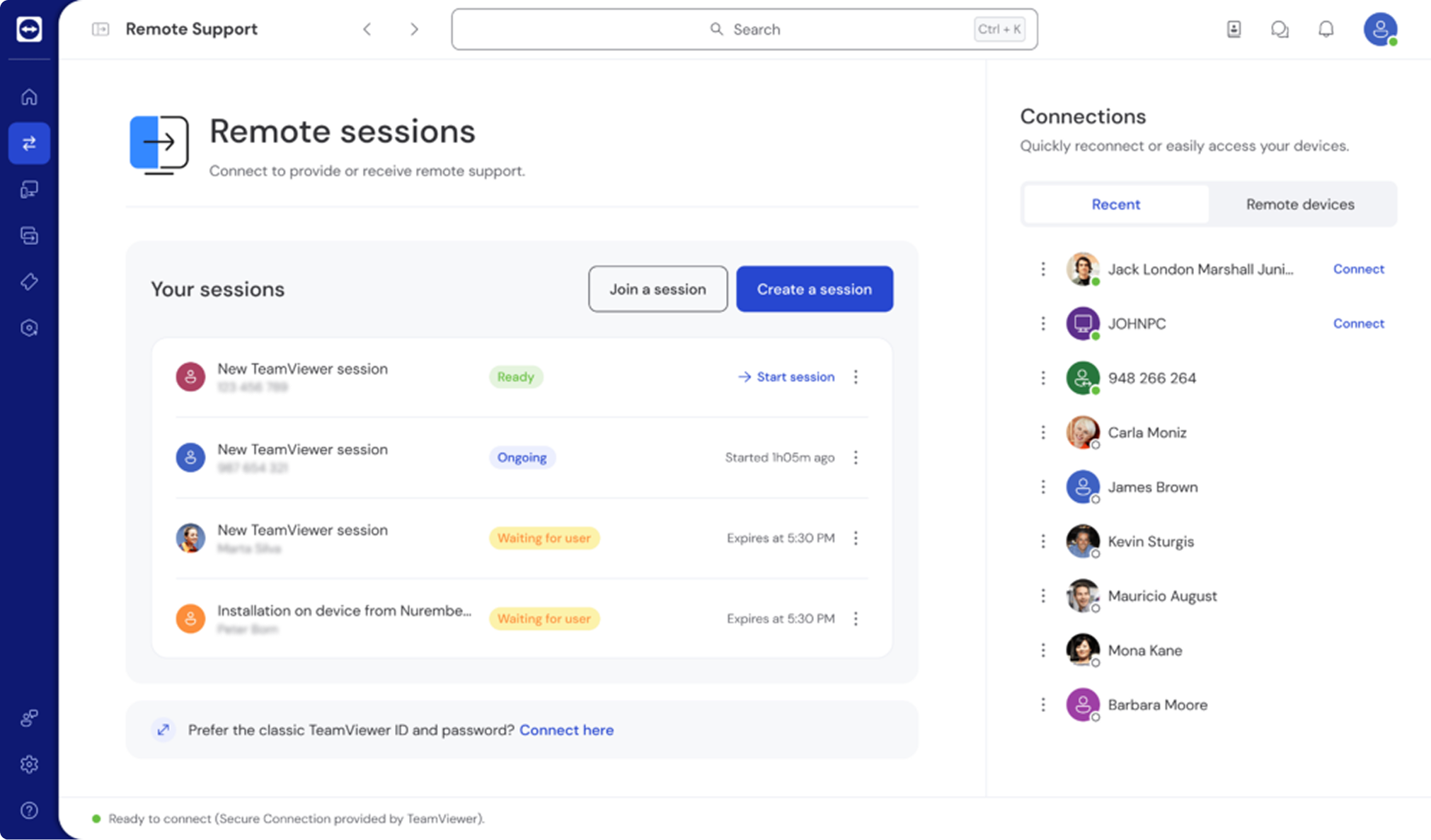
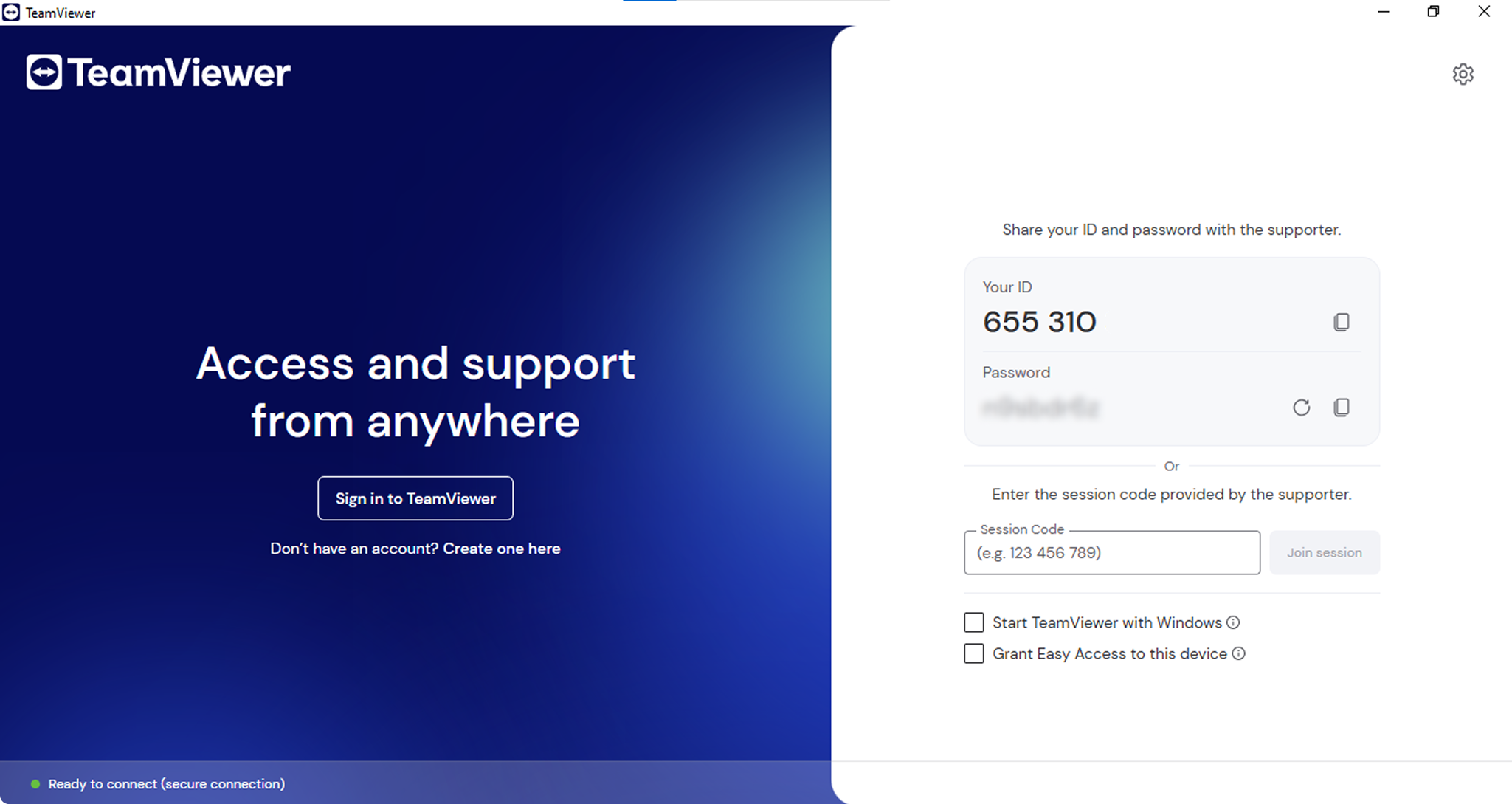
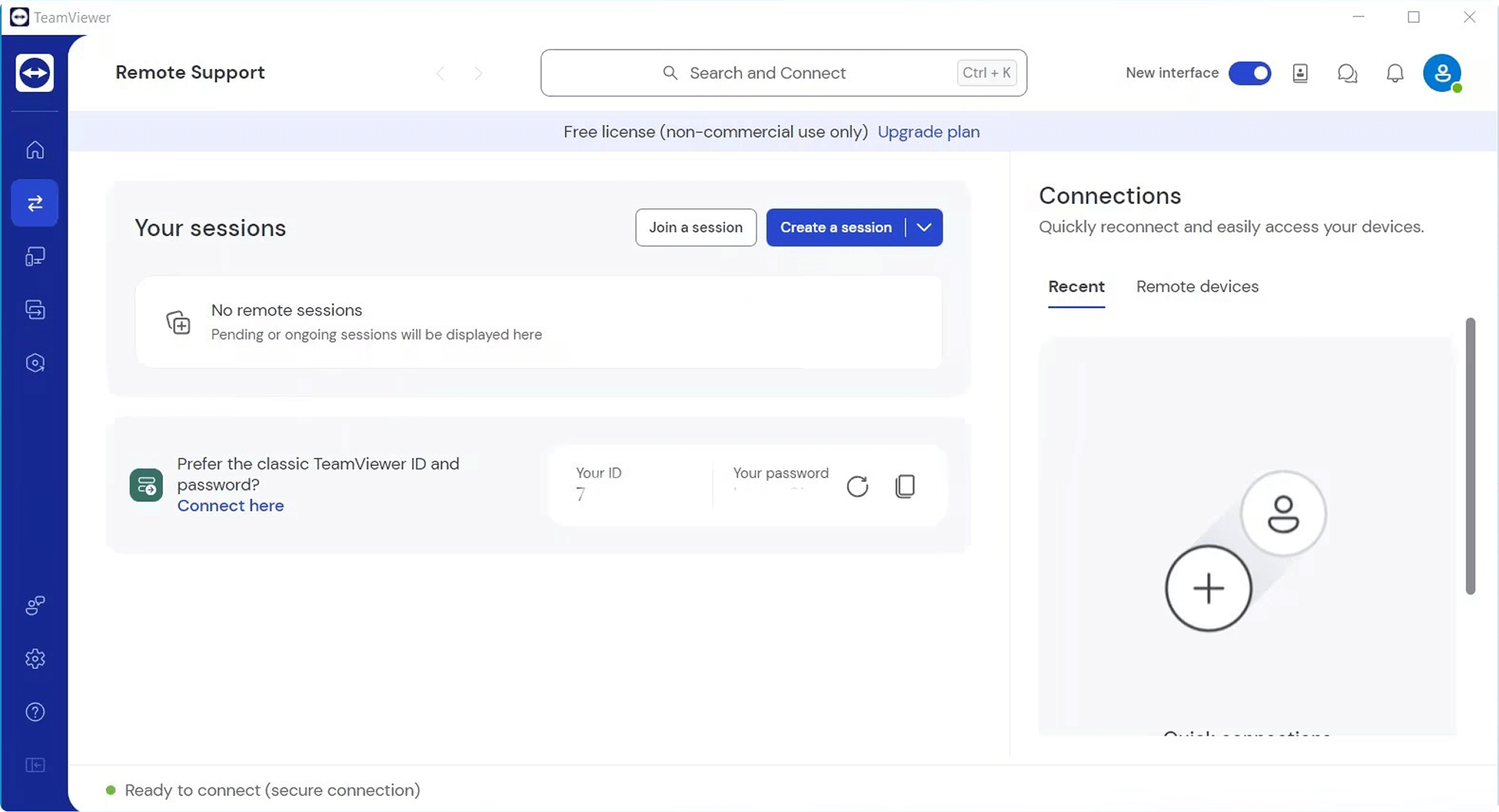
TeamViewer takes a different approach with a feature-rich interface built for teams with multiple technicians. The console includes tabs for sessions and device groups, along with session logs and built-in chat and calling tools. Although more complex, the interface equips teams to collaborate, oversee operations, and keep workflows running smoothly in wider environments.
Operating System Support
Before picking a remote desktop tool, you’ll want to make sure it works with your devices and operating systems. A remote desktop comparison can make it easier to pick the right tool for your system.
| Operating System | Splashtop | TeamViewer |
|---|---|---|
| Windows | ||
| macOS | ||
| Linux | Limited (viewer / access limitations) | |
| ChromeOS | Limited (via web client) | Limited (app/web, screen-share only) |
| Android | ||
| iOS | ||
| Raspberry Pi | Not officially highlighted | Limited (agent support) |
| FreeBSD |
Security
Security is a key consideration when choosing remote desktop software. Remote access tools connect directly to important systems and private data, so protection matters. The following compares Splashtop vs TeamViewer security, highlighting what protections selected plans provide.
Splashtop Remote Access Pro & Performance security
Splashtop Remote Access Pro and Performance use several security measures to keep remote connections safe, such as:
- • TLS Encryption: Protects all remote sessions. It keeps data safe as it moves between local and remote devices.
- • AES Encryption: Encrypts session data to prevent unauthorized users from accessing or intercepting it.
- • Two-Factor Authentication (2FA): Adds an extra verification step at login to help keep accounts secure.
- • Device Authentication: Ensures only approved devices can connect remotely, lowering the risk of untrusted access.
- • User & Group Access Management: Lets admins set role-based permissions to control who can access specific computers and what they can do.
- • Session Recording: Allows sessions to be saved for auditing, compliance, or internal review.
- • Secure Web Console: Offers a protected web console that lets admins centrally manage users and devices. It also provides control over access settings to keep everything secure.
TeamViewer Premium and Business security
TeamViewer is built with a strong, enterprise-grade security framework that includes the following protections:
- • AES 256-bit Encryption: Encrypts all remote sessions and data to keep them safe.
- • Two-Factor Authentication (2FA): Requires one more step at login, using an authenticator app or SMS, to keep your account secure.
- • One-Time Passwords: Use time-limited passwords for each session to lower the risk of unauthorized connections.
- • Device Authorization: Authorizes connections from recognized devices and stops any untrusted or unknown endpoints.
- • Session Recording and Audit Trails: Saves session recordings and keeps detailed logs for auditing and compliance.
- • Compliance Certifications: Meets GDPR requirements. It also follows major industry standards, including ISO 27001, SOC 2, and HIPAA.
- • Advanced Access Controls: Admins can set roles to control what users and devices are allowed to do.
Usage Scenarios
How you plan to use the software should guide your decision. Is it for daily remote work, on-demand support, or managing multiple systems? Here’s how people commonly use TeamViewer vs Splashtop across their different plans.
Splashtop Usage by Plan
- • Remote Access Plan: People use this for day-to-day remote work. It handles multiple monitors and longer sessions without trouble.
- • Remote Support Plan: IT teams and help desks choose this when they need to jump in and help users on demand.
- • Autonomous Endpoint Management: Designed for IT departments and MSPs that need to monitor and manage endpoints from one place, including patching and handling vulnerabilities.
- • Splashtop Enterprise: Geared toward larger organizations that require stronger security controls and room to scale.
TeamViewer Usage by Plan
- • Remote Access License: It’s what individuals choose when they need simple, secure access to their own devices at home or on the go.
- • Business License: This is what small businesses would pick. It supports multiple users and includes basic tools to manage computers and user access.
- • Premium and Corporate Plans: Larger teams prefer these plans. They use them to gain more oversight and detailed reporting, along with the ability to support more users.
- • Tensor Plan: Enterprises use this plan to run large-scale deployments. It adds stronger security controls and connects with existing business systems.
Integration
Integrations matter for teams that depend on connected IT systems and automation, or even for those using third-party tools. In this Splashtop vs TeamViewer comparison, we’ll see how each platform handles integrations and how well the different plans fit into everyday workflows.
| Integration Feature | Splashtop Remote Access Pro | Splashtop Remote Access Performance | TeamViewer Business | TeamViewer Premium |
|---|---|---|---|---|
| API Access | Basic API access for integrations | Advanced API with extended features | ||
| ITSM (IT Service Management) Integration | Limited integration (basic support tickets) | Full ITSM integrations such as ServiceNow, Jira Service Desk | ||
| CRM Integration | Limited support via third-party tools | Native integrations with Salesforce, Zoho CRM | ||
| Custom Workflow Automation | Basic workflow automation | Advanced workflow automation tools | ||
| Third-Party App Compatibility | Limited (basic integrations, no automation focus) | Limited (same as Pro) | Basic compatibility (e.g., Microsoft Teams, Zendesk) | Wide range including Microsoft Teams, Zendesk, Salesforce, Slack, and Zapier |
| White-labeling & Branding | ||||
| Admin Console / User Management | ||||
| Integration with Ticketing Systems | Limited integration (e.g., Zendesk, Freshdesk) | Full support and seamless integration | ||
| SDKs or Developer Tools | Limited | Extensive developer tools |
Splashtop Remote Access Pro & Performance Integration
- • Remote Access Pro: This plan offers very limited integration options. It’s mainly a tool for connecting to computers remotely, designed to be fast and secure, without support for APIs, ITSM, or CRM systems.
- • Remote Access Performance: This plan works similarly to Pro. It gives emphasis on capabilities, such as USB device redirection and color-accurate streaming, to support performance and advanced remote access. Automation or connecting with other systems is not its focus. You will only find more advanced integrations and APIs in the platform’s higher-tier plans, such as Remote Support or Enterprise.
TeamViewer Premium & Business integration
- • Premium: This plan gives wider and more flexible integration options. It includes API access that makes connections with IT service management (ITSM) tools and CRM platforms possible.
- • Business: This plan offers basic API access plus a few third-party integrations, which work well for small teams. More advanced integrations are only available in the Corporate and Tensor plans.
Pricing
Cost is an important factor when picking a remote desktop solution. In this section, we’ll cover Splashtop vs TeamViewer pricing to show how each platform structures its plans for individuals, as well as for small teams and larger organizations. Each plan grows in features, performance, and admin tools. Here’s a summary of their pricing plus a table to compare the options side by side.
Splashtop
Splashtop Remote Access keeps pricing simple and clear, with plans built for remote work and users who need high-performance features.
- • Personal — Free (Local Network Only): Good for personal use on a local network. It provides basic remote access without any extra features.
- • Remote Access Solo — $8/month: Perfect for solo professionals. You can connect to your computer and move files. Printing documents from anywhere is also available.
- • Remote Access Pro — $11/month: Made for small teams or professionals who need more control. Lets you manage users and groups and use multiple monitors. Recording sessions and sharing screens through the web is also possible.
- • Remote Access Performance — $17/month: For heavy users and creative work. Everything in Pro is included here, together with support for USB device redirection, 4:4:4 color mode, stylus use remotely, and Wacom Bridge.
- • Splashtop Enterprise — Custom pricing: A flexible plan for larger organizations, with advanced security and detailed access controls. There are also tools for managing many users at once.
TeamViewer
TeamViewer offers plans for everyone, from people using it at home to large enterprise teams, such as:
- • Free (Personal Use Only): Free for non-commercial use with limited features. Perfect for occasional personal access.
- • Business — $24.90/month: Made for individual users or small teams. It includes one session at a time and basic tools to manage users and devices.
- • Premium — $50.90/month: Lets multiple users connect, with up to three sessions running at once. This plan comes with better monitoring and reporting features.
- • Corporate — $112.90/month: This plan is for teams that want stronger device management. It also offers detailed reporting and tools for handling service cases.
- • Tensor — Custom pricing: Designed for large enterprises. This plan includes enhanced security and integration options, along with tools for handling large-scale deployments.
| Pricing plans | Splashtop | TeamViewer |
|---|---|---|
| Free Trial | (7-day commercial trial) | (14-day commercial trial) |
| Free Personal Version | ||
| Level 1 | $8/month (Solo) | $24.90/month (Business) |
| Level 2 | $11/month (Pro) | $50.90/month (Premium) |
| Level 3 | $17/month (Performance) | $112.90/month (Corporate) |
| Level 4 | N/A | $229.90/month |
| Level 5 | Custom pricing (Enterprise) | Custom pricing (Tensor) |
Possible Errors and Restrictions
Remote desktop platforms, no matter how reliable they are, can run into limitations. Their license, network, or even their computer setup can sometimes get in the way. Pay attention to the limits before you start, and it will be easier to prevent surprises and choose a plan that meets your day-to-day work.
Let’s take a look at Teamviewer vs Splashtop to see what limits you might run into.
Splashtop
- • Plan-based feature limits: You’ll only find some advanced tools in the Remote Access Performance plan. This includes USB device redirection and 4:4:4 color mode, along with remote stylus use and Wacom Bridge.
- • Personal vs commercial restrictions: The Personal plan is for non-commercial use only. You can’t use it for tasks related to work or business.
- • Concurrent user limits: Only one person can access a computer at a time by default. Additional licenses are required to let multiple users access a computer at once.
- • Network restrictions: Firewalls or strict security settings can block connections. You might need to adjust them manually.
- • Limited integrations: Remote Access plans don’t include API, ITSM, or CRM connections. Those are available only in Remote Support or Enterprise plans.
TeamViewer
- • Commercial use enforcement: The free version is meant for personal use. If TeamViewer suspects business activity, sessions may be interrupted or limited.
- • Session limits: Business licenses only allow a certain number of simultaneous sessions. Running extra sessions or letting more users join requires moving to a higher-tier plan.
- • Network restrictions: Firewalls, proxies, or strict network settings can block TeamViewer, so you need to make manual changes to the settings to fix this.
- • Forced updates: TeamViewer may pause sessions or restart during required updates, which can disrupt your work.
- • Compatibility issues: TeamViewer may not fully support older operating systems or specialized hardware.
- • Feature availability: Only Premium or higher plans provide advanced management and monitoring features.
Pros And Cons
No platform is perfect, with both Splashtop and TeamViewer having their upsides and limitations. In this remote desktop comparison, we’ll walk through what each tool handles well and where it may not be the best fit in everyday use. The points below reflect feedback from users along with our own experience using both apps.
- Delivers fast connections with very little lag and smooth screen streaming;
- Easy to navigate, with a clean layout that doesn’t take long to learn;
- Priced competitively, especially when compared to more enterprise-heavy solutions;
- Dependable unattended access for everyday remote tasks;
- Offers extra tools for creative and technical work, including USB device support and 4:4:4 color mode, together with stylus and Wacom compatibility in the Performance plan;
- Handles multi-monitor setups well, including multi-to-multi monitor connections.
- Some of the more advanced tools are only available in the higher-tier plans like Performance;
- Remote Access plans don’t include API access or connections to ITSM and CRM systems;
- The Personal plan is limited to non-commercial use and can’t be used for business;
- Not built for large IT teams that need to run multiple support sessions at the same time.
TeamViewer
“Renew and improve your business collaboration with TeamViewer's remote working features”— Read full review
- Offers a free version for personal, non-business use;
- Works across many platforms, including IoT and embedded devices;
- Lets you host training sessions with up to 25 participants;
- Makes it easy to move files between connected computers using drag and drop;
- Shows clear status updates for devices during remote sessions;
- Installs quickly and handles updates without needing router changes;
- Allows you to share either the entire desktop or just a single application window;
- Responsive customer support and advanced tools for enterprise users.
- Runs best with a strong and steady internet connection;
- Paid licenses can cost more than some competing tools;
- Both users need to be on the same version to prevent connection problems;
- Transferring large files isn’t always smooth;
- Can run into issues when used behind certain proxy servers.
HelpWire: Top Free Alternative for Splashtop and TeamViewer
HelpWire is a modern tool that lets IT teams connect to and manage devices remotely. It focuses on fast connections and is easy to get the hang of. Security is also a main part of the experience. Because of these, it can be a practical alternative to Splashtop or TeamViewer.
Key Features
- ✅ Fast remote access: Provides fast, responsive sessions, even when the connection isn’t great.
- ✅ Works on multiple platforms: Compatible with Windows, macOS, and Linux.
- ✅ Session recording and reporting: Save sessions for training, audits, or to make sure you meet compliance rules.
- ✅ File transfer and chat: Share files safely and communicate with other participants during live sessions.
- ✅ No client installation required: Launch a session through a web link without installing any app.
- ✅ Unattended access: Set up devices for secure access without needing someone on the other end.
- ✅ Strong security: End-to-end encryption and two-factor authentication protect sessions. Meanwhile, Auth0 manages user authentication.
HelpWire brings important remote access tools together in a clean, contemporary interface — perfect for teams that want a flexible and secure support solution that’s easy to use.
Splashtop